

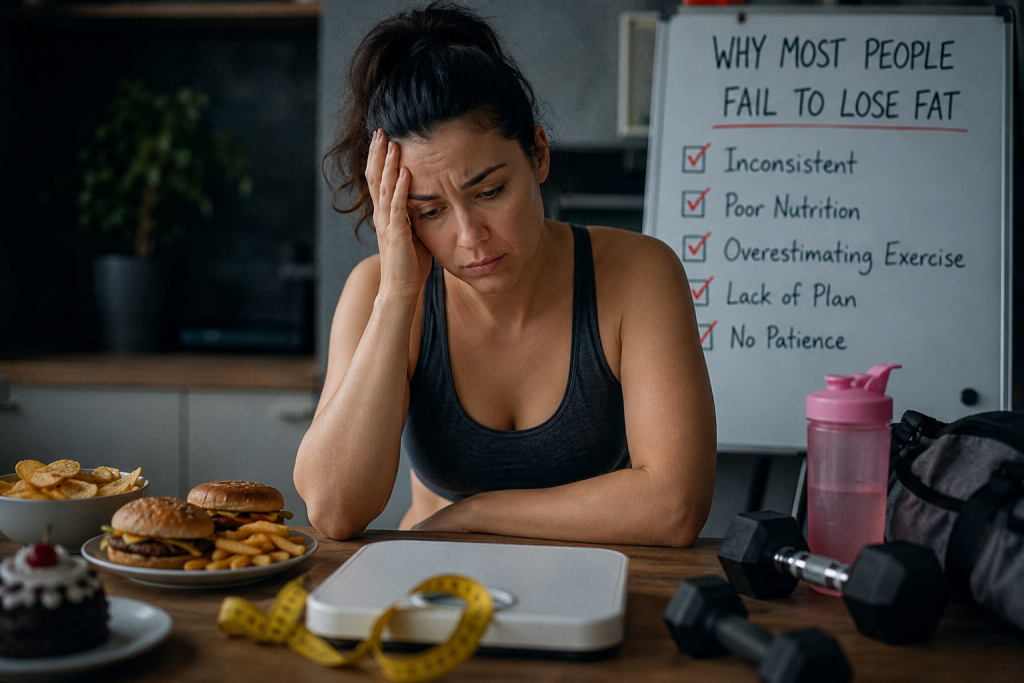

If you’ve been exercising consistently but the number on the scale refuses to move, you’re certainly not alone.
Many people believe that working out several times a week should automatically lead to fat loss. When it doesn’t, frustration quickly follows. Some begin exercising even harder, while others try restrictive diets or simply give up altogether.
The truth is that exercise is only one piece of a much bigger puzzle.
Losing body fat depends on a combination of nutrition, daily habits, recovery, sleep, stress management and long-term consistency. Even highly motivated people can unknowingly make small mistakes that completely offset the calories they burn during workouts.
The good news is that these mistakes are usually easy to fix once you understand why they happen.
In this guide, we’ll explore the most common reasons people fail to lose fat—even when they exercise regularly—and explain what you can do instead to achieve sustainable, healthy results.
1. Overestimating Calories Burned During Exercise
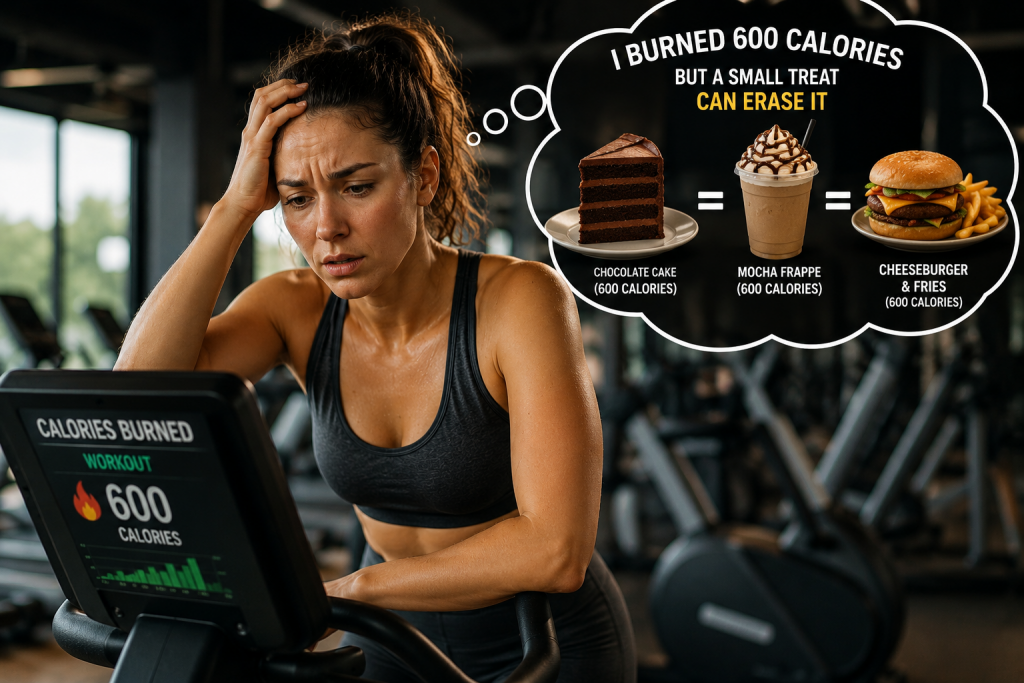
One of the biggest misconceptions in fitness is believing that exercise burns far more calories than it actually does.
Many gym machines, smartwatches and fitness trackers provide calorie estimates. While these tools can be useful for tracking trends, they often overestimate calorie expenditure.
For example, a 45-minute workout might feel extremely challenging, yet it may only burn 300–500 calories depending on your body weight, training intensity and fitness level.
Unfortunately, people often reward themselves afterwards with a snack, dessert or takeaway that contains even more calories than they burned.
This creates the illusion of being in a calorie deficit while, in reality, calorie intake may exceed calorie expenditure.
What to do instead
Instead of trying to “earn” food through exercise, think of training as a way to improve your health, maintain muscle mass and increase daily energy expenditure.
Nutrition should remain the primary driver of fat loss.
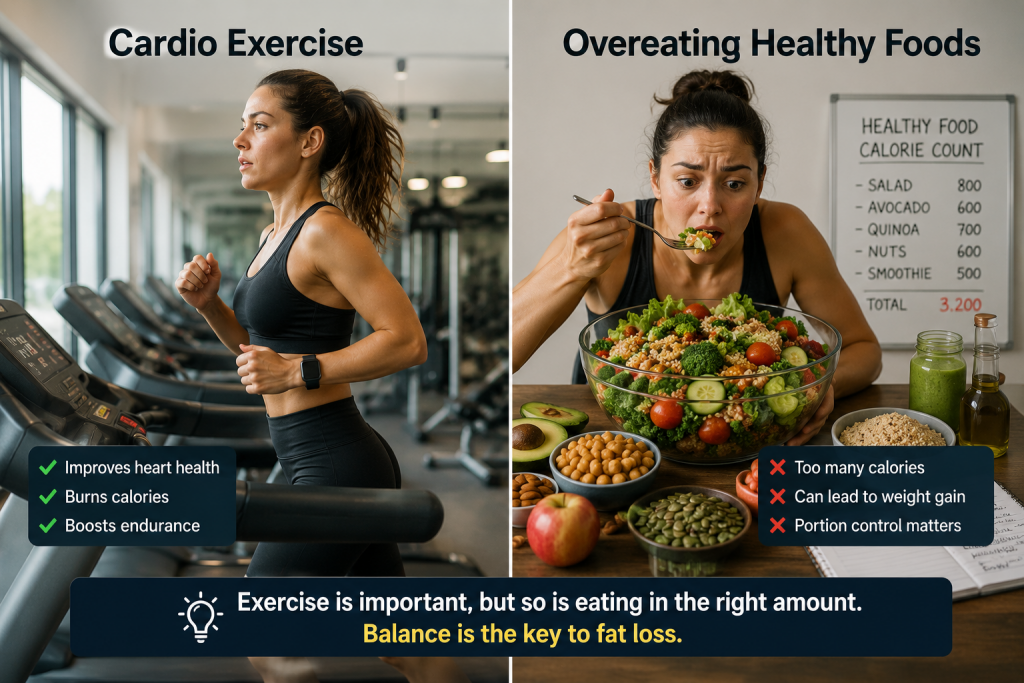
2. Eating Healthy Foods… But Too Much of Them
Another common mistake is assuming that healthy foods cannot contribute to weight gain.
Foods such as nuts, peanut butter, olive oil, granola, avocado and dried fruit are all nutritious choices. However, they’re also calorie-dense.
Even protein shakes and smoothies can become surprisingly high in calories when multiple ingredients are added.
Healthy food is still food.
If total calorie intake consistently exceeds your body’s needs, fat loss becomes extremely difficult regardless of food quality.
Practical tip
Focus on portion sizes as much as food quality.
Using a food diary or calorie tracking app for just one or two weeks can help you understand where extra calories may be coming from without needing to count calories forever.
3. Believing Cardio Alone Is Enough
Many people spend hours walking on a treadmill, cycling, or using a cross-trainer while completely ignoring resistance training.
Cardiovascular exercise is excellent for heart health and increasing calorie expenditure, but relying on cardio alone has several limitations.
Without resistance training, your body may gradually lose muscle as you lose weight.
Since muscle tissue helps maintain your metabolic rate, losing muscle can make future fat loss more difficult.
Strength training helps preserve lean muscle while encouraging your body to burn a greater proportion of fat during a calorie deficit.
The goal isn’t simply to lose weight.
The goal is to lose fat while maintaining—or even building—muscle.
That’s what creates a healthier, stronger and more athletic physique.
4. You Can’t Outrun a Poor Diet
Many people believe that exercising permits them to eat whatever they want.
Unfortunately, it doesn’t work that way.
Even intense workouts cannot compensate for consistently overeating.
A single fast-food meal or sugary dessert can contain more calories than an entire workout burns.
Instead of viewing exercise as a way to “cancel out” unhealthy eating, think of it as a tool to improve overall health while nutrition creates the calorie deficit needed for fat loss.
What works better?
Eat mostly whole foods.
Include enough protein in every meal.
Fill half your plate with vegetables.
Limit ultra-processed foods rather than trying to eliminate them.
Small, sustainable improvements almost always outperform extreme diets.
5. Poor Sleep and High Stress Levels
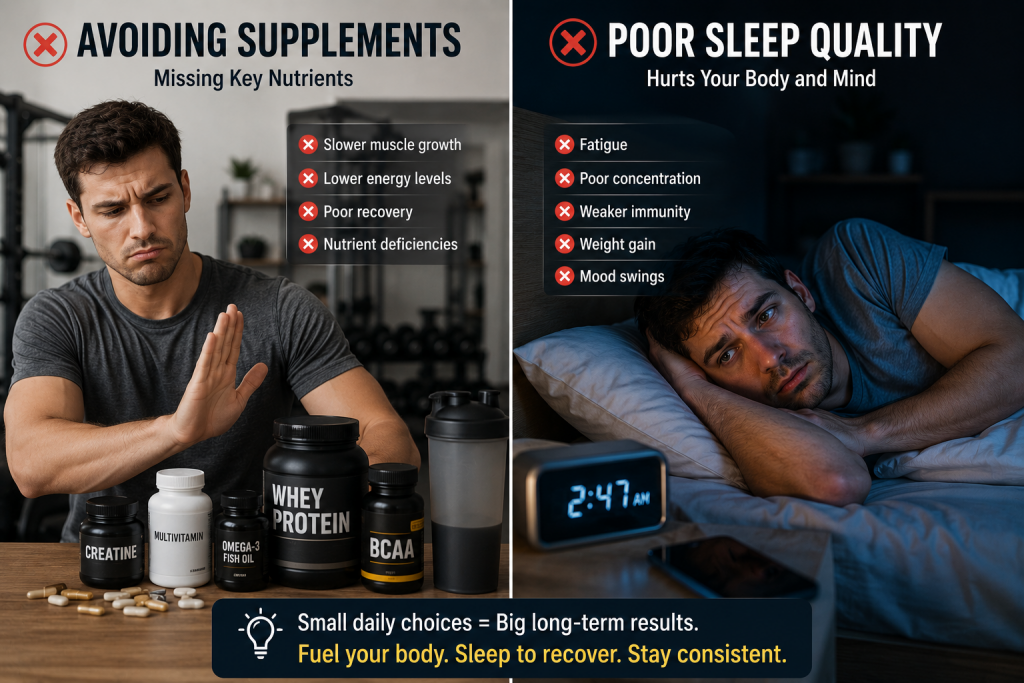
Sleep is one of the most overlooked aspects of successful fat loss.
Consistently sleeping less than seven hours may increase hunger, reduce energy levels and make healthy food choices more difficult.
Chronic stress can have a similar effect.
When people feel stressed, they’re more likely to snack, overeat or skip workouts altogether.
Improving sleep and managing stress won’t magically burn fat, but they make healthy habits much easier to maintain.
Simple improvements
Aim for 7–9 hours of sleep.
Keep a consistent bedtime.
Reduce screen time before bed.
Walk outdoors daily.
Practise relaxation techniques if stress is high.
6. Expecting Fast Results Instead of Lasting Results
One of the biggest reasons people give up is expecting dramatic changes within just a few weeks.
Fat loss is rarely linear. Some weeks you’ll lose weight, while other weeks the scale may stay the same—even when you’re doing everything correctly. Water retention, hormonal fluctuations, stress and increased muscle glycogen can all temporarily affect body weight.
Instead of focusing only on the number on the scale, pay attention to other signs of progress:
Your clothes fit better.
You feel stronger during workouts.
Your energy levels improve.
You recover faster after exercise.
Your waist measurement gradually decreases.
Sustainable fat loss takes patience. Consistency over months will always beat perfection for a few days.
7. The Best Strategy for Sustainable Fat Loss
If you want results that last, avoid quick fixes and focus on building habits you can maintain.
A sustainable fat loss plan should include:
Eating a moderate calorie deficit rather than starving yourself.
Prioritising protein at every meal.
Strength training two to four times per week.
Staying physically active every day.
Sleeping seven to nine hours each night.
Managing stress effectively.
Being consistent rather than perfect.
Remember, fat loss is a marathon—not a sprint.
Frequently Asked Questions (FAQ)
Can I lose fat without exercising?
Yes. Fat loss mainly depends on maintaining a calorie deficit. However, exercise improves overall health and helps preserve muscle mass.
Which is more important for fat loss: diet or exercise?
Nutrition usually has the greater impact, while exercise supports fat loss and improves body composition.
How much exercise should I do?
Aim for at least 150 minutes of moderate activity each week, combined with two or more strength-training sessions.
Why am I exercising but not losing weight?
Common reasons include overeating, overestimating calories burned, poor sleep, stress, or expecting results too quickly.
Conclusion
Many people believe that simply exercising more will automatically lead to fat loss. In reality, successful fat loss depends on a combination of smart nutrition, regular physical activity, quality sleep, stress management and consistent habits.
Rather than searching for the perfect workout or the latest diet trend, focus on making small improvements that you can maintain over time.
The best fat loss plan is the one you can follow consistently.
Looking to support your fitness journey with reliable supplements and practical training advice?
Explore our evidence-based articles, expert reviews and carefully selected products to help you make informed decisions and achieve your health goals.